Updated 2026 · 12 min · by NebulaTrip local experts
High-speed rail is usually the simplest way to link China's major cities, but only after you choose the correct station, train and passport workflow. The biggest mistakes are not about finding the platform: they are booking from a similarly named station across town, entering a passport name inconsistently, or allowing too little time for a document that will not scan at an automatic gate. Treat the passport as the travel credential, the train number as the navigation key and every connection as station-specific.
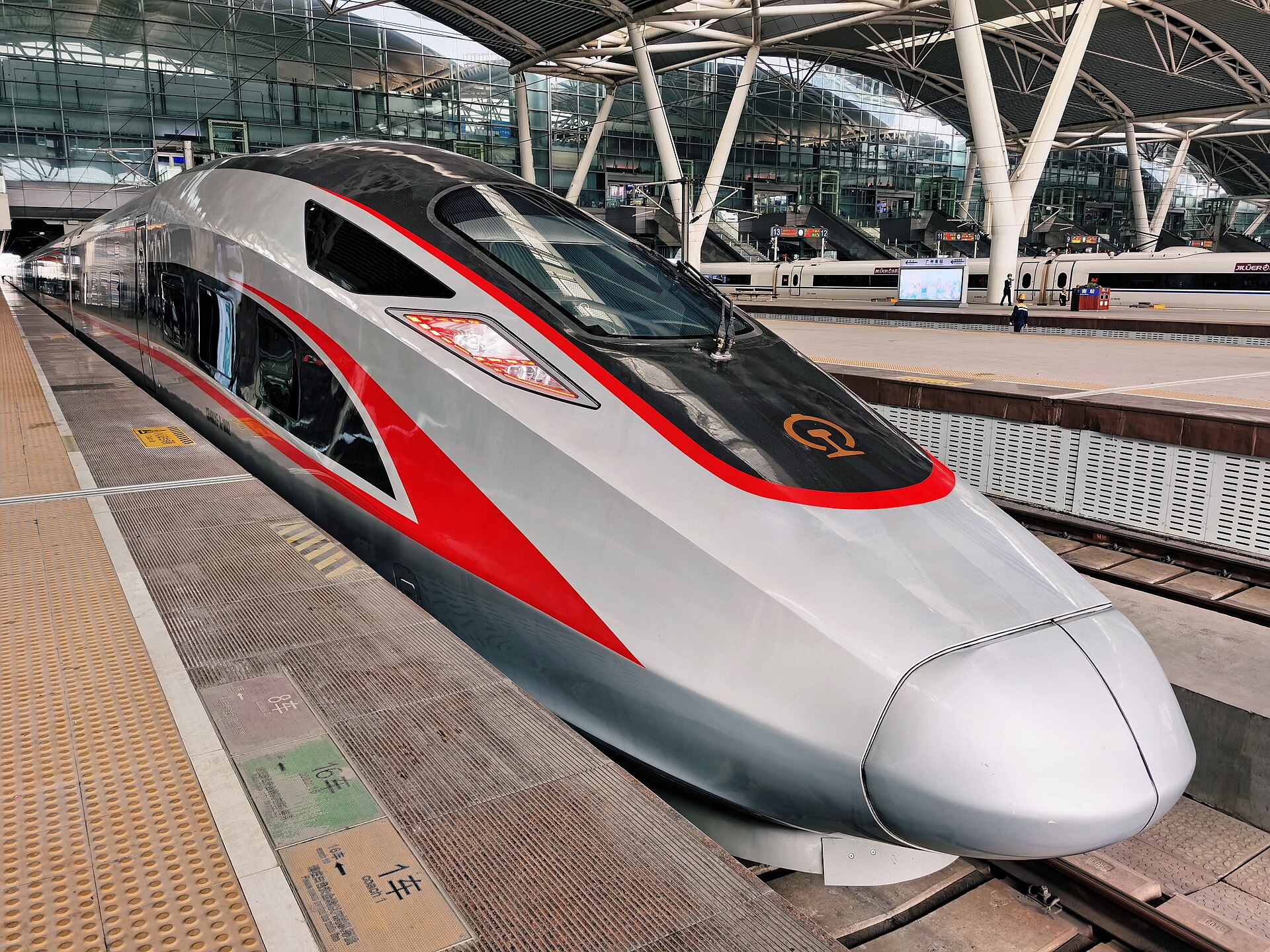
Begin with the full station name. Beijing, Shanghai, Xi'an and Chengdu each have several passenger stations, and the useful high-speed departure may be at a north, south, east, west or Hongqiao terminal rather than the station closest to your hotel. Check the Chinese characters, map location and transfer time before paying. “Beijing” and “Beijing South” are different destinations for a taxi driver and for the railway system.
Train prefixes help, but they are not a complete quality ranking. G services are normally the fastest high-speed option on long trunk routes; D services include high-speed and overnight products; C services are generally intercity. The exact stopping pattern matters more than the letter alone. A later nonstop train can arrive before an earlier service with many intermediate stops, so compare departure station, arrival station and duration on the actual result.
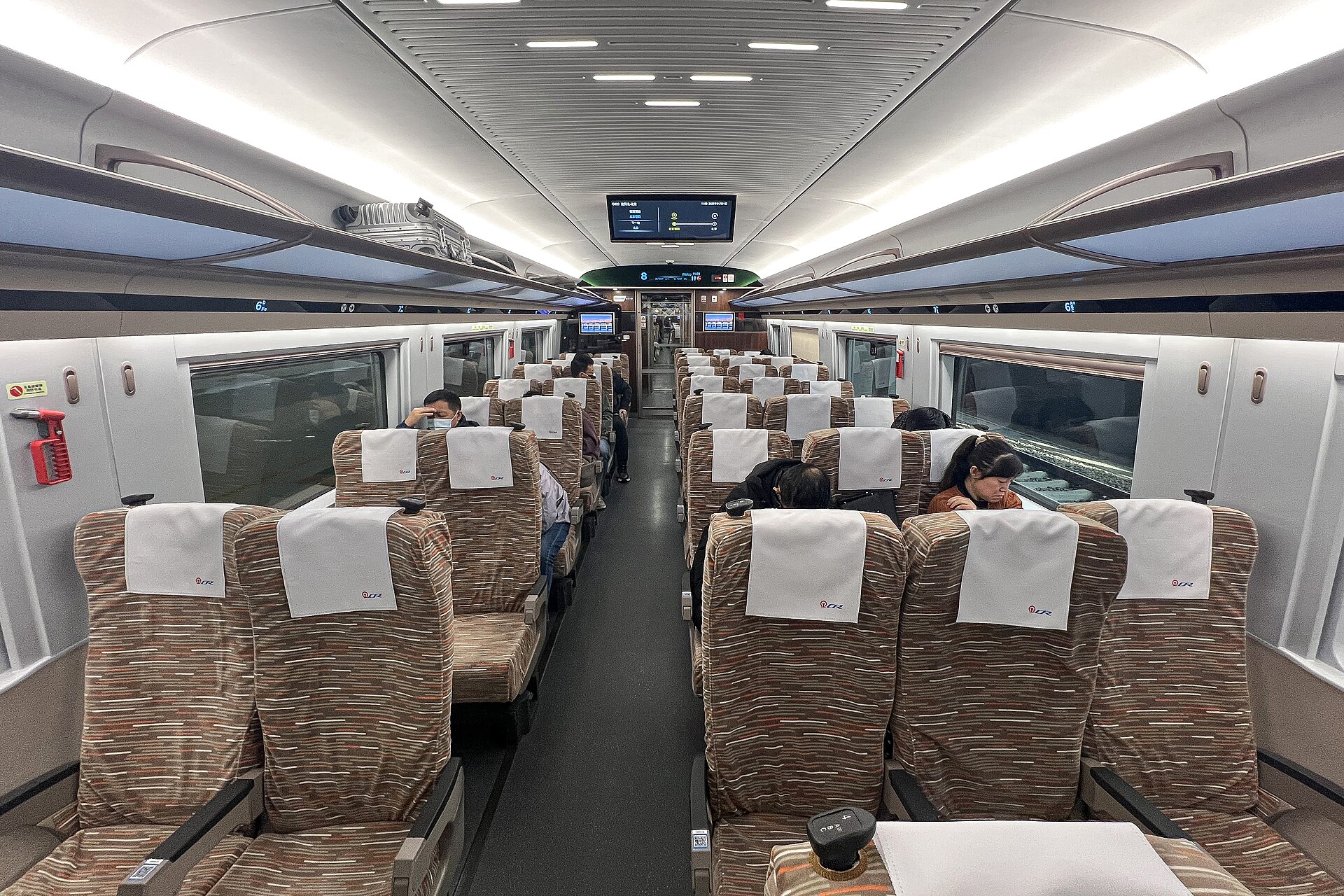
Second class is the practical default and commonly uses a 3+2 layout. First class normally provides a wider 2+2 layout, while business class is a much more expensive low-density product. Not every train sells every class, and carriage interiors vary by train set. Choose first class for space, not because it promises a quieter carriage; choose business only when the premium matters more than the itinerary budget. For large luggage, a seat near a carriage-end rack can be useful, but storage is shared and cannot be reserved like a seat.
China Railway's official 12306 English website accepts valid foreign passports for registration and real-name tickets. Enter the name, passport number, nationality and expiry information consistently with the document. Do not casually remove a middle name or swap family and given names between passengers because another booking site displays them differently. If 12306 asks for identity verification, finish that step before the sale date rather than discovering it while a popular train is filling.
The current official advance-sale period is 15 days including the travel date, but each station has its own daily release time. “Fifteen days ahead” does not mean every train appears at midnight. Search the route in advance, note when sales open, and use the official waitlist function when an acceptable train is sold out. National holidays and Friday or Sunday intercity peaks can produce real competition; a published capacity or an agent's promise does not guarantee a seat.
Third-party agencies can simplify language and accept additional payment methods, but they may take a request before official sales begin. A request confirmation is not the same as an issued railway ticket. Check the train number, date, stations, passenger document and seat status after issuance. Keep the 12306 order details available even when an agency booked it. Never pay a stranger to “verify” an account or send a passport scan through an untrusted chat merely because a ticket is scarce.
A railway e-ticket is linked to the identity document used to buy it. Bring that original passport to enter, board and leave the destination station. The downloadable itinerary sheet and a reimbursement receipt are records; 12306 explicitly says they cannot be used as tickets. Printing one can help you show the train details, but it does not replace the passport.
Some station readers accept some foreign passports automatically, but this is not reliable enough to build a tight connection around. If the reader rejects the document, stop repeating the scan and use the staffed manual channel. Railway rules require an artificial identity-check lane for documents that cannot be read automatically and for passengers who need assistance. Show the original passport and, if requested, the order number. This is a normal fallback, not proof that the ticket is invalid.
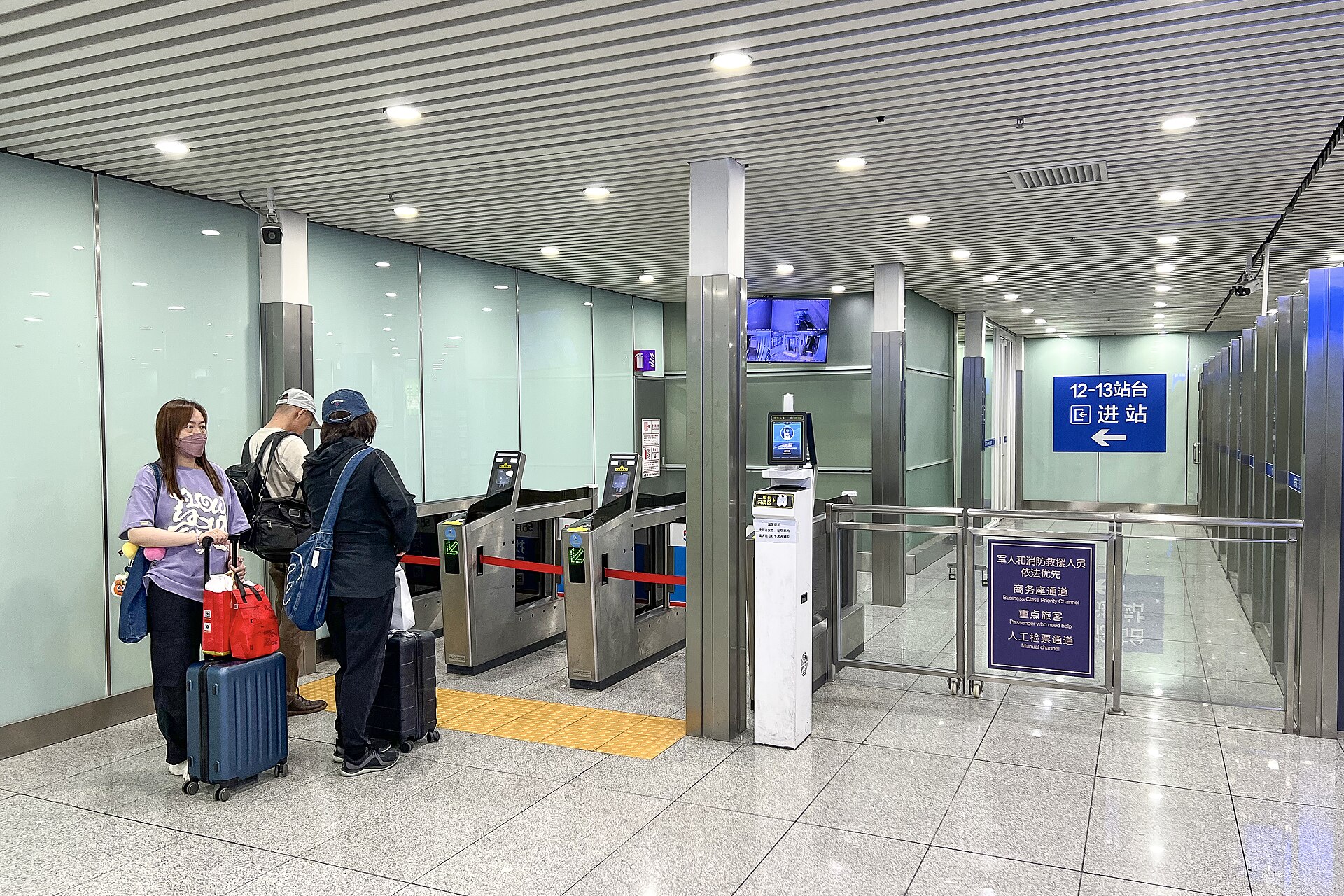
Do not collect a paper ticket “just in case” unless staff tell you it is required for the transaction. Most e-ticket journeys do not need one, and foreign passports are not universally supported by self-service machines. If a passport is replaced after booking, or a number was entered incorrectly, contact 12306 or a station ticket counter before travel; a photocopy of the old document does not silently transfer the real-name booking.
For a first departure from a large hub, arriving 45–60 minutes early is a sensible planning margin, not an official universal minimum. Holiday queues, a remote drop-off point or a failed passport scan can use that time quickly. At a smaller station on a familiar route, less may be comfortable; for a same-station connection, confirm whether you can use the transfer channel instead of exiting to the street.
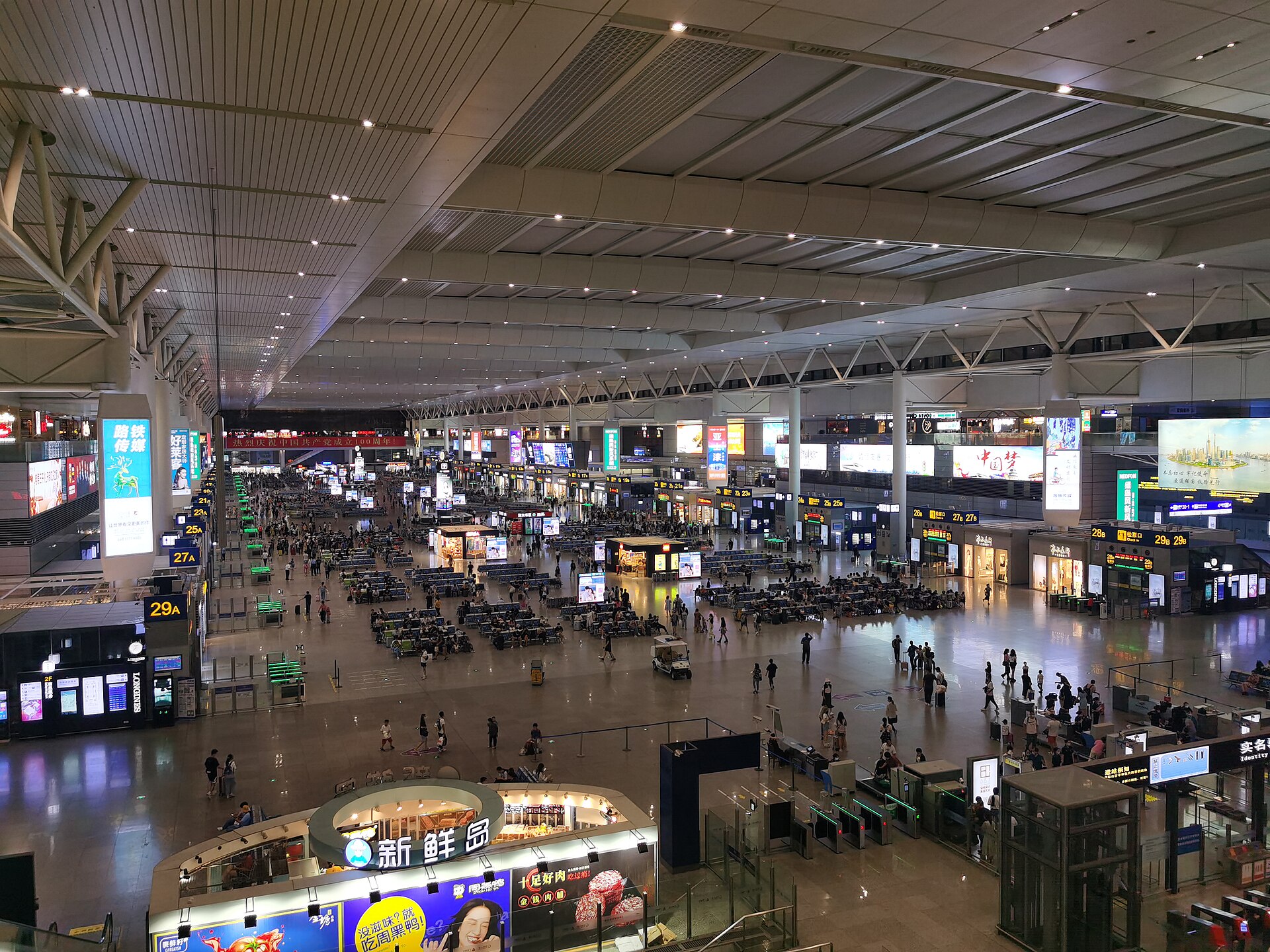
At the entrance, complete the identity check and baggage security screening. Restrictions on blades, flammables, aerosols, power banks and other items change and are more detailed than an airport analogy suggests, so check the current railway prohibited-items notice before packing. After security, find the train number on the departure board. The same city may have several departures close together; destination alone is not a safe identifier.
Your screen or order shows the waiting area or gate, carriage and seat. Boarding begins only when the gate display changes, and the cut-off is before the scheduled departure. Follow the carriage markers on the platform rather than walking the length of the train after boarding. If the platform is changed, staff announcements and live boards outrank a historical photo or screenshot. Keep the passport accessible at the destination because an exit gate may check it again.
High-speed rail is strongest when it links central or well-connected stations without an airport transfer. Beijing–Shanghai, Beijing–Xi'an and Xi'an–Chengdu are natural trunk-route candidates; Shanghai–Suzhou or Hangzhou can work as short hops. But a route name is not a duration. Each train has its own stops and station pair, and new timetables can change the comparison. Use the live 12306 result for the exact date instead of copying a guide's hour estimate.
For a day trip, check the last useful return before buying the attraction ticket. For a multi-city route, avoid changing stations in the same city unless the transfer is deliberate; “Shanghai Hongqiao to Shanghai Station” is an urban transfer, not a platform change. Leave more margin when the next booking is an international flight or an independently ticketed train because a late arrival does not create automatic protection across separate contracts.
On board, carry water and a meal for the journey you actually booked. Catering, socket position, quiet-car availability and Wi-Fi vary by train. Keep luggage within sight and do not block the aisle or shared racks. If plans change, use 12306 or an official counter to check current refund and endorsement rules before departure. The best rail plan is not the maximum number of cities: it is a sequence with the right stations, issued tickets and enough recovery time when one leg changes.
Private & flexible · English-speaking guide · real-time online booking.










Tell our local experts what you'd like to see and we'll design a private, tailor-made itinerary with English-speaking guides — free plan & quote, no obligation.